at
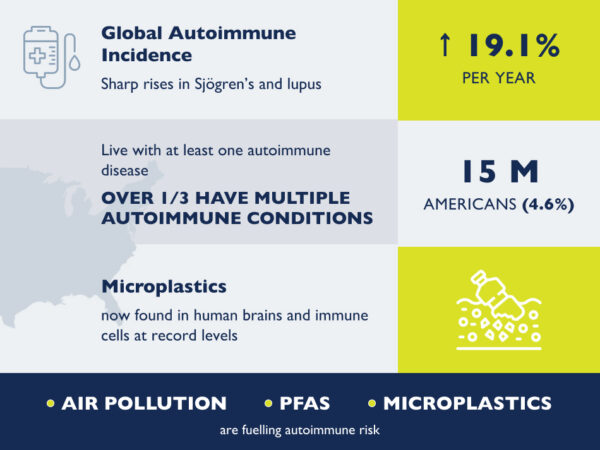
Autoimmune diseases used to be quite rare, but now they’re becoming more common so rapidly that many researchers are calling them a “silent epidemic.”
These conditions occur when the immune system mistakenly targets the body’s own tissues, leading to chronic inflammation, organ damage, and significant impacts on quality of life.
Below, we break down what the latest data shows about the rise in autoimmune illnesses globally and in Canada, why experts believe the increase is happening now, and what it means for individuals navigating these conditions.
Autoimmune diseases happen when the immune system mistakenly targets healthy tissues in the body. This can impact various parts such as the joints, digestive system, skin, thyroid, brain, or even multiple organs at the same time. Historically, almost all types of autoimmune conditions were considered rare or difficult to diagnose, but in the mid-2000s, rates began climbing sharply in industrialized countries. Still, the full picture has just started to emerge.
Multiple large-scale analyses now confirm that this 25-year-long, steady increase is not solely due to improved diagnostic testing, but also reflects a true rise in autoimmune disorders across populations.
A Harvard Medical School report highlights consistent increases in conditions such as type 1 diabetes, lupus, and multiple sclerosis, noting that these upward trends appear across age groups and geographic regions.
This pattern indicates that autoimmune diseases are genuinely becoming more prevalent globally, not merely detected more frequently. Let’s take a closer look at the data.
Globally, researchers estimate:
These increases suggest powerful environmental and lifestyle drivers, alongside genetic susceptibility, are contributing to the global rise in autoimmunity.
Autoimmune diseases are rising worldwide, with increases documented across Europe, Asia, and Australia. A major 2023 UK cohort study by Oxford, Glasgow and Leuven Universities found that 19 autoimmune diseases affect about 10% of the population, with overall incidence rising ~4% from 2000 to 2019.
Conditions such as Graves’ disease, coeliac disease, and Sjögren’s syndrome increased more sharply, while others remained stable or declined, according to findings from The Lancet population-based cohort study. Additional context is available in the BMJ disease-level breakdown.
Similar trends appear across Asia, where South Korea and Japan report rising rates of autoimmune and connective tissue disorders, underscoring a global shift in immune health.
Some autoimmune conditions are appearing earlier in life, with pediatric clinics reporting increased early-onset cases of type 1 diabetes and juvenile idiopathic arthritis. This raises concerns about the long-term health and economic impacts, as younger patients may require decades of treatment.
In January 2025, the Mayo Clinic released one of the largest autoimmune studies ever published, analyzing health records from over 10 million individuals.
Key findings:
This dataset provides the most reliable national estimate to date and reinforces observations that autoimmune diseases are surging among both young and middle-aged adults.
Canada shows distinct autoimmune patterns.
Canada consistently ranks among the highest countries globally for MS prevalence. Current estimates show:
Canada has one of the world’s highest rates of Crohn’s and ulcerative colitis:
Hashimoto’s and Graves’ diseases have been increasing steadily, especially among women ages 30–50. Environmental toxins and variations in iodine intake are areas of research focus.
Scientists have increasingly focused on the gut microbiome (the trillions of bacteria that live in the digestive tract) as a key factor in the development of autoimmune diseases. Modern diets high in processed foods, artificial additives, and low-fibre ingredients can disrupt microbial diversity, weakening the intestinal barrier and promoting chronic inflammation.
Several studies indicate that individuals with autoimmune conditions often exhibit reduced gut microbial diversity and elevated levels of inflammatory microbial strains. For example, patients with Crohn’s disease frequently exhibit depleted populations of beneficial bacteria such as Faecalibacterium prausnitzii, which normally help regulate immune responses. The absence of these protective microbes may contribute to heightened immune sensitivity.
Environmental contaminants such as microplastics and PFAS may also affect gut bacteria. Early research suggests microplastics introduce foreign chemical compounds into digestive tissues, altering microbial activity and potentially triggering immune overreactions. Although this area of research is still evolving, scientists increasingly view the microbiome as one of the most important mechanisms linking environment and immunity.
A 2024 Nature Medicine–profiled study confirmed microplastic particles in humans:
Samples from 2024 showed far higher levels of microplastic accumulation than those from 2016.
Researchers believe this could lead to chronic immune activation — a core feature of autoimmune diseases.
A 2024 Mendelian randomization study demonstrated a strong association between particulate matter (PM2.5) exposure and a higher risk of:
These findings were consistent across European and Asian populations.
Viral infections, particularly COVID-19, have been linked to autoimmune activation.
A 2025 PLOS One study found that:
Researchers suspect that viral interference with immune regulation may trigger or unmask autoimmune conditions.
Factors contributing include:
While genetics play a role, scientists estimate environmental factors may account for up to 70% of autoimmune risk.
While genetics influences autoimmune susceptibility, experts now agree that they cannot explain the scale or speed of rising diagnoses. Genetic predisposition follows stable inheritance patterns, meaning widespread, rapid growth in autoimmune disease must be driven by external forces.
For example, identical twin studies show that in conditions like lupus and type 1 diabetes, genetics account for only 20–30% of overall disease risk. This makes autoimmunity different from conditions like cystic fibrosis or sickle-cell disease, where heredity is almost entirely responsible. Instead, autoimmunity arises from a “perfect storm” of genetic vulnerability combined with environmental and lifestyle triggers.
This understanding is especially important because it underscores how quickly autoimmune rates can change. If environmental exposures worsen or spread (such as increased air pollution, synthetic chemical contact, or viral outbreaks), autoimmune rates can rise within a single generation, even if genetics remain constant.
Autoimmune diseases create significant long-term financial strain.
In the U.S., autoimmune diseases are estimated to cost over $100 billion annually, surpassing some cancer categories in direct medical costs.
Canada faces similar pressures as biologic therapy prescriptions rise across provinces.
Autoimmune diseases create major economic ripple effects, reducing workforce participation and disability claims. They have a financial impact on employers with increased workplace accommodation requests.
MS is a leading cause of neurological disability in young adults. Rheumatoid arthritis and lupus cause chronic pain, fatigue and mobility issues, which lead to long term disability claims. IBD, Crohn’s and colitis all severely impair daily functioning and the ability to work.
Despite the substantial impact these autoimmune diseases have on activities of daily living and capacity to work they often result in denied disability claims. Symptoms such as fatigue and pain cannot be quantified with objective testing and depend largely on subjective reporting. This results in an increased number of litigated cases between individuals and their disability insurance providers and a consequential surge in cases in the courts, further straining publicly-funded systems.
Autoimmune diseases cause public and private financial strain from costly medications, primary care physician visits and specialist consultations. Women (who represent the clear majority of autoimmune patients) experience compounded income loss and caregiving burdens, according to the American Autoimmune Related Diseases Association (AARDA).
Nationally, rising rates of autoimmune disease intensify pressure on healthcare systems; in Canada, specialist shortages contribute to delayed diagnoses and higher long-term costs.
Experts expect autoimmune diseases to continue rising into the 2030s due to:
Healthcare systems worldwide are preparing for sustained demand in rheumatology, immunology, gastroenterology, and neurology.
Autoimmune diseases take a major emotional toll, often causing chronic pain, fatigue, anxiety, and cognitive difficulties that disrupt relationships and work. Research shows patients face nearly double the risk of depression and anxiety compared to the general population (BMJ Mental Health). Many conditions are “invisible illnesses,” leading to misunderstanding and isolation (Harvard Health Publishing).
The rise of autoimmune disease represents one of the most significant health transitions of our generation. The increase is too rapid to be explained by genetics alone and reflects deeper environmental, infectious, and lifestyle shifts that shape how our immune systems function.
Canada, which has some of the highest rates of MS and IBD in the world, is in a great position to take the lead in researching autoimmune triggers and potential treatments.
As autoimmune conditions continue to grow in prevalence, insurers, employers, healthcare providers, and policymakers must understand the scale of the problem and the urgency of investing in prevention, treatment, and support.
reach out to an experienced disability lawyer who can help by reviewing your policy, preparing the evidence, and challenging the insurer’s decision.
Contact us by text at 613-777-0992 or through our website to schedule a consultation. We provide free consultations in French or English. In most cases, we represent clients on a contingency fee basis, which means you do not pay legal fees unless you win or reach a settlement.

June is Brain Injury Awareness month and to support the cause, our firm participates in various activities to promote awareness, brain injury prevention, […]
This year again, Burn Tucker Lachaîne is pleased to have sponsored the Fleming Golf Fundraiser for the Brain Injury Association of the Ottawa […]
Burn Tucker Lachaîne PC is proud to have been one of the comedian sponsors during Spinal Cord Injury Ontario’s Comedy Night on March […]
 Reviews